
ECOFIL® · Oil filtration technology

Oil filtration, regeneration and monitoring.

ECOFIL® systems remove particles from 1 µm, water, soft sludges and resins in bypass, and can significantly extend oil-change intervals.

Manufactured by ECOFIL spol. s r.o., Michalovce, Slovakia — oil filtration technology since 1991.

How depth microfiltration works

The filtration unit runs in bypass, alongside the system's own filters. ECOFIL® elements are made from high-quality cellulose and polypropylene; at low pressure and relatively low flow, contamination deposits axially between the windings and forms a filter cake.

The result is a very high absorption capacity — up to 2,000 g of solids and up to 900 ml of water per element, depending on the insert — at an efficiency of 99.998 % (Ex value).

Removes

  • Solid particles from 1 µm
  • Free and dissolved water
  • Soft sludges and resins
  • Sediments and ageing products

Delivers

  • Longer oil life and change intervals
  • Lower operating costs
  • Higher machine reliability
  • Less waste oil

Suitable for

  • Hydraulic oil
  • Turbine oil
  • Transformer oil
  • Gear oil
  • Transmission oil
  • Engine oil
  • Cutting oil
  • Diesel fuel
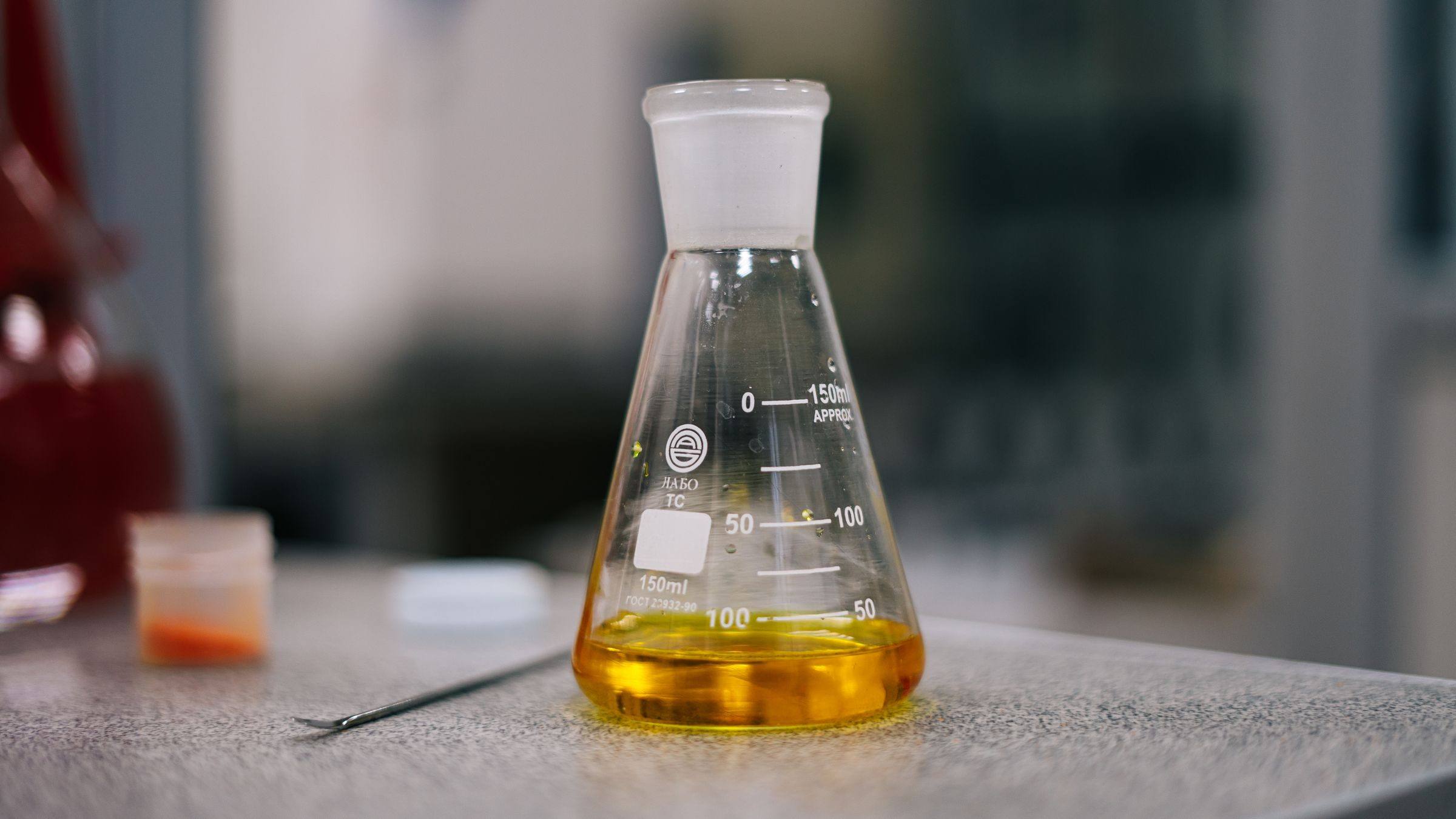
Sample of clean amber oil in a laboratory flask

Cleanliness classes: ISO 4406 and NAS 1638

New oil is rarely clean. Unused oil typically sits at ISO 19/17/14–20/18/15 (NAS 8–9); ECOFIL® fine filtration brings it to 13/11/08–14/12/09 (NAS 2–3).

Each ISO 4406 code gives three range numbers: particles at ≥ 4 µm, ≥ 6 µm and ≥ 14 µm. Each step up roughly doubles the count.

New, unused oil ISO 19/17/14
500,000 ≥ 4 µm
After ECOFIL® filtration ISO 13/11/08
8,000 ≥ 4 µm
Maximum number of particles per 100 ml · log scale
Maximum number of particles per 100 ml
ISO 4406 ≥ 4 µm ≥ 6 µm ≥ 14 µm NAS 1638 Note
12/10/06 4,000 1,000 64 –
12/10/07 4,000 1,000 130 1
12/10/08 4,000 1,000 250 –
13/11/08 8,000 2,000 250 2 After ECOFIL® filtration
14/12/09 16,000 4,000 500 3 After ECOFIL® filtration
15/13/10 32,000 8,000 1,000 4
16/14/11 64,000 16,000 2,000 5
17/15/12 130,000 32,000 4,000 6
18/16/13 250,000 64,000 8,000 7
19/17/14 500,000 130,000 16,000 8 New, unused oil
20/18/15 1,000,000 250,000 32,000 9 New, unused oil
21/19/16 2,000,000 500,000 64,000 10
22/20/17 4,000,000 1,000,000 130,000 11
22/20/18 4,000,000 1,000,000 250,000 –
23/21/18 8,000,000 2,000,000 250,000 12

What contaminates oil

Free and dissolved water

Water is the main cause of oil oxidation. It enters during filling, storage and transport, and in service through tank ventilation, worn hydraulic-motor pistons or sealing rings, and faults such as in heat exchangers. It forms acids, ages seals and hoses, and leads to corrosion, cavitation, soft sludges and varnish.
Soft sludges, sediments and resins

Measured as a colour difference (ΔE) on a membrane patch, per ASTM D7843.

  1. ΔE < 15 Normal
  2. ΔE 15–30 Worse
  3. ΔE 30–40 Abnormal
  4. ΔE > 40 Critical

Typical impurities and their origins

  1. 01

    Rubber and dust particles

    Wear of seals and hoses, or defective breather filters.

  2. 02

    Varnish and soft sludges

    Water content, oil ageing, overheating or impermissible oil mixing.

  3. 03

    Rubber particles

    Improperly pressed hoses or incorrectly installed seals.

  4. 04

    Fibres

    Cleaning cloths, defective system filters, plastic fibres from support rings.

  5. 05

    Overheating residues

    Internal leaks, oil overloading in the machine, coking.

  6. 06

    Weld spatter

    Refilling from dirty containers, or residue from new-machine production.

  7. 07

    Hard resins

    Overheating, or residue from impermissible oil mixing.

  8. 08

    Metal particles

    Cavitation, particles broken from metal surfaces, or mechanical damage.

Filtration elements

Five standard elements, selected by oil type and target cleanliness.

  • Element HH
    Fineness
    ≥ 1 µm
    Cleanliness achieved
    NAS 1638 2–3
    ISO 4406 14/12/9

    Ultra-fine filtration; sensitive hydraulic systems; soft sludges

  • Element H
    Fineness
    ≥ 3 µm
    Cleanliness achieved
    NAS 1638 4–5
    ISO 4406 15/13/10

    Fine filtration; sensitive hydraulic systems

  • Element T
    Fineness
    ≥ 5 µm
    Cleanliness achieved
    NAS 1638 6–7
    ISO 4406 18/16/13

    Standard filtration; common hydraulic systems

  • Element WE
    Fineness
    ≥ 10 µm
    Cleanliness achieved
    NAS 1638 8–9
    ISO 4406 19/17/14

    Free-water absorption (“water eater”)

  • Element GB
    Fineness
    ≥ 8 µm
    Cleanliness achieved
    NAS 1638 8–9
    ISO 4406 19/17/14

    High-viscosity oils; transmissions and gearboxes

TRAFO and ECOTOWER TAN elements are used for insulating-oil regeneration.

Filtration housings

Fixed bypass housings for permanent installation on a tank or engine.

Fixed bypass housings for permanent installation on a tank or engine.
Housing Tank volume Max. working pressure Height Weight Installation Ø Inlet / outlet
ECOFIL® H35 500 l 6–315 bar 306 mm 6.0 kg 240 mm 3/8″ / 1/4″
ECOFIL® H20 300 l 6–315 bar 309 mm 4.2 kg 200 mm 3/8″ / 1/4″
ECOFIL® T35 500 l 6.5 bar 310 mm 5.2 kg 240 mm 1/4″ / 1/4″
ECOFIL® T20 300 l 6.5 bar 290 mm 3.4 kg 200 mm 1/4″ / 1/4″

Mobile filtration devices

Self-contained units for servicing tanks and machines, and for filling equipment with new oil.

Self-contained units for servicing tanks and machines, and for filling equipment with new oil.
Device Flow Tank volume Max. working temp. L × W × H Weight
ECOFIL® SN M / XL / XXL 24V 180 l/h (max.) 1,000 l (max.) 80 °C — 13 kg (max.)
ECOFIL® SN 030 24V 180 l/h 1,000 l 80 °C 600 × 230 × 500 mm 37 kg
ECOFIL® SN 060 Dachshund 360 l/h 2,000 l 80 °C 720 × 230 × 500 mm 37 kg
ECOFIL® SN 060 Trolley 360 l/h (max.) 2,000 l (max.) 80 °C 580 × 520 × 965 mm 62 kg
ECOFIL® SN 120 720 l/h 5,000 l 80 °C 835 × 520 × 1,005 mm 90 kg
ECOFIL® SN 180 1,080 l/h 8,000 l 80 °C 1,095 × 520 × 1,005 mm 110 kg

Wider range

ECOFIL® also builds devices for specific duties — including ATEX, heated, magnetic and transformer-oil versions — and to individual requirements.

  • SN 240
  • SN 300
  • SN 360
  • SN 360 T40 RF
  • SN ATEX
  • SN Heat
  • SN Magnet
  • SN Pump
  • SN 060 RUDLA
  • SN 030 Trafo
  • SN Trafo Regeneration
  • T40 Triple
  • ON 240
  • ONW 240
  • SN Super ECO 24V

ONW vacuum filtration devices

ONW units remove free and dissolved water to ≤ 10 ppm under vacuum, together with solid particles, soft sludges and sediments, and degas the oil in the vacuum chamber. They regenerate oil with the TAN element without complex modifications to the housings, run fully computer-controlled with real-time monitoring, and are built to individual requirements.

  • ONW 120
  • ONW 480
  • Autonomous-control variant
  • Regeneration variant
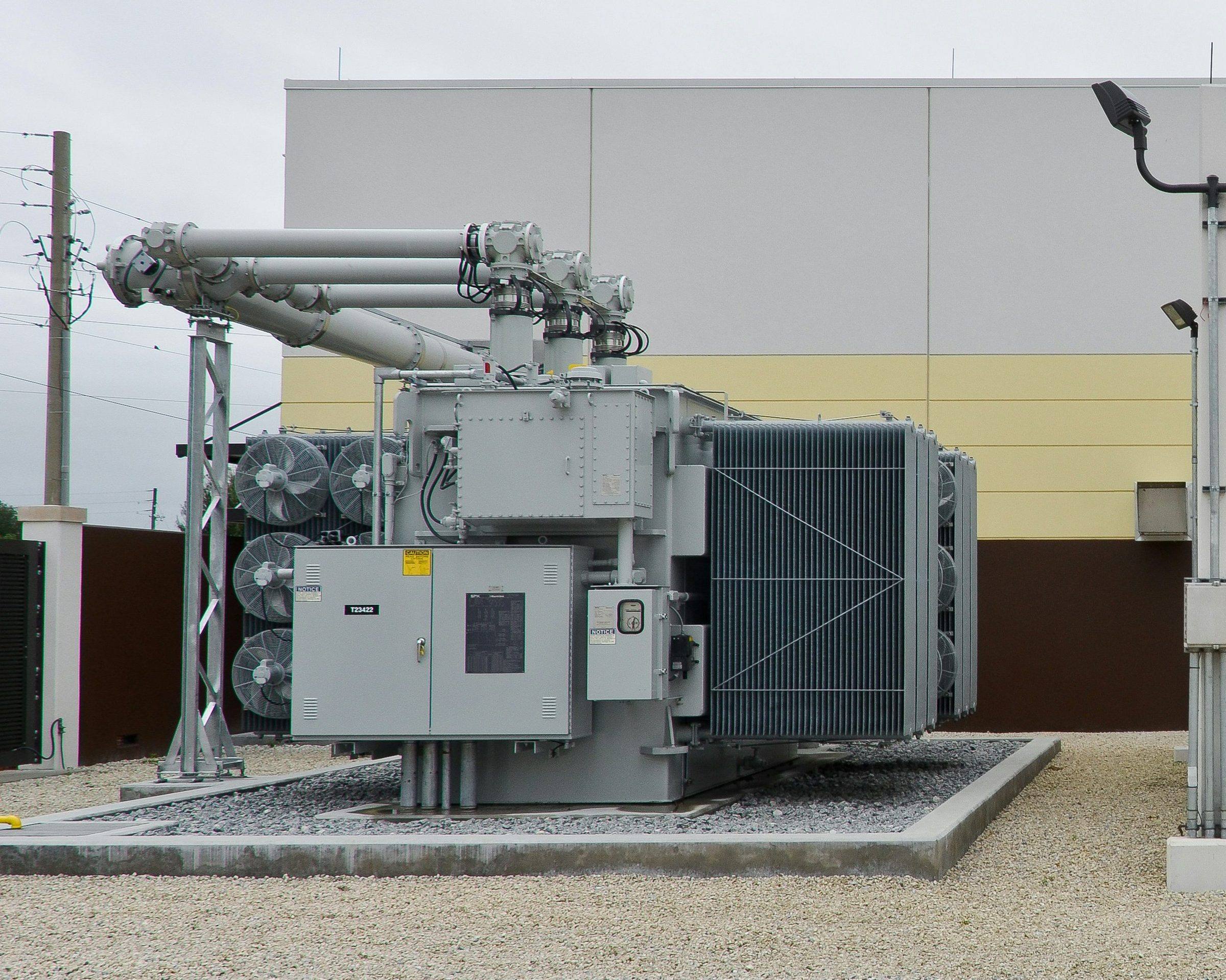
Power transformer at an outdoor substation

Transformer-oil regeneration

Filtering insulating oil through TRAFO and ECOTOWER TAN elements can substantially improve or fully regenerate it — meeting STN EN 60422 for mineral insulating oils in electrical equipment, and removing corrosive sulphur (DBDS). Regeneration proceeds gradually and is tracked with NEURON® oms.

Achievable results

  1. 01 Removal of solid particles larger than 1 µm
  2. 02 Removal of ageing products (soft sludges)
  3. 03 Water reduced to ≤ 10 ppm (10 mg/l)
  4. 04 Breakdown voltage raised above 80 kV / 2.5 mm
  5. 05 Acidity (TAN) reduced to as low as 0.01 mgKOH/g
  6. 06 Interfacial tension raised above 40 mN/m (ring method)
  7. 07 Resistance raised above 300 MΩ
  8. 08 Power factor reduced
  9. 09 Colour lightened to a minimum of 1 on ASTM D1500
  10. 10 Degassing to 0.1 %
  11. 11 Replenishment of inhibitors

From an oil temperature of 20 °C.

NEURON® oms online monitoring

Real-time monitoring of filtration and regeneration, viewed in a web browser on Apple, Windows, Android and Linux devices, with cloud visualisation and archiving and micro-SD data logging. Available as NEURON® TRAFO and NEURON® STANDARD.

Connectivity

  • GSM
  • LAN
  • Wi-Fi
  • LoRa

Measured parameters

  • Cleanliness class (ISO 4406 / NAS 1638)
  • Dissolved and free water (ppm)
  • Turbidity
  • Soft sludges and resins (ΔE)
  • Temperature
  • System pressure
  • Breakdown voltage (BDV)
  • Moisture in winding insulation (%)
  • Power factor
  • Interfacial tension (IFT)
  • Oil colour (ASTM D1500)
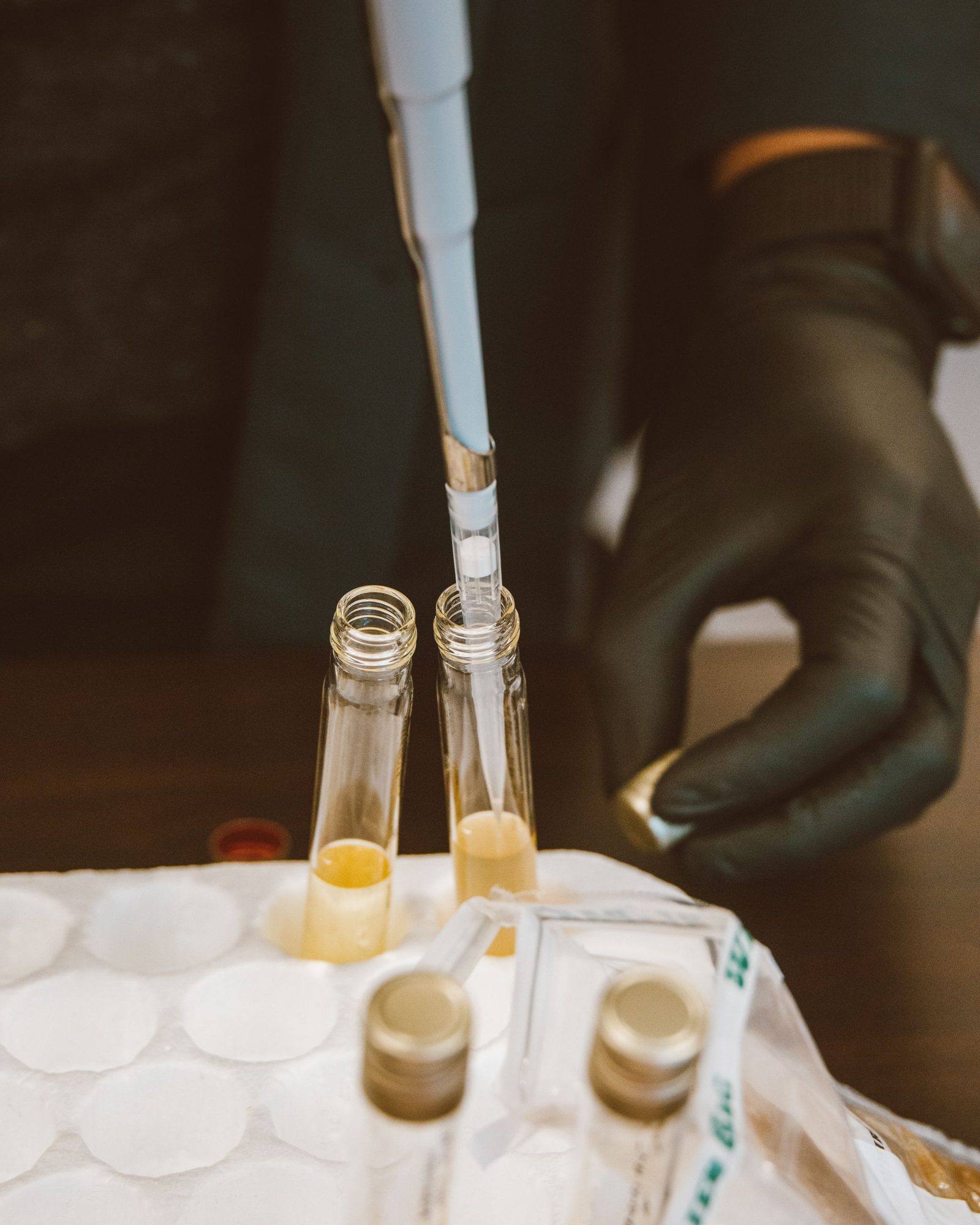
Oil samples being drawn for laboratory analysis

Oil analysis kit

All components needed to check the condition and quality of oils and other fluids:

  • Cleanliness class to ISO 4406, NAS 1638 and GOST 17216
  • Water content in %, ppm and mg/l
  • Viscosity in cSt (mm²/s)
  • Soft sludges (ΔE) per ASTM D7843

Installation

A fixed ECOFIL® bypass housing connects to the hydraulic tank or engine sump; a mobile device serves any tank and also filters new oil as it is filled. Removing water and impurities to 1 µm can extend oil life, stabilises the additive balance and protects the equipment.

Oil tank Hydraulic system In-line, high pressure In-line, low pressure ECOFIL® bypass filter New oil Mobile device
ECOFIL® bypass filter · Hydraulic system · Oil tank

Tell us your technical requirements.

Oil type, volume, operating temperature and target cleanliness class are enough for a first recommendation.